
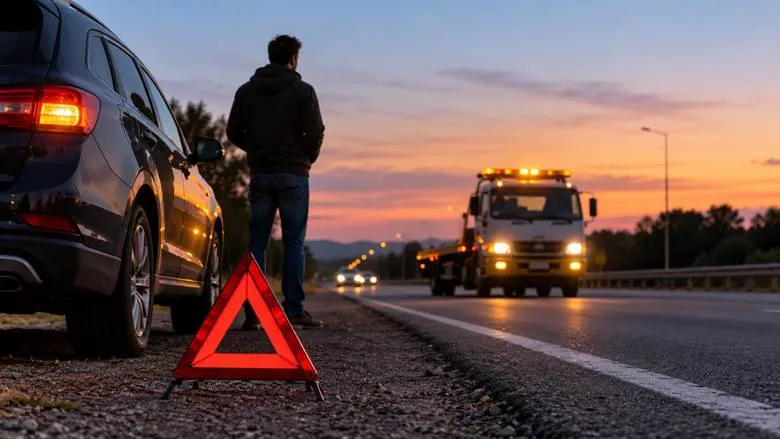
A vehicle breakdown can happen without warning, leaving you stranded on a busy highway, a quiet country road or somewhere unfamiliar. While waiting for a tow truck, it’s easy to focus on getting your car repaired or reaching your destination. However, your immediate safety should always come first.
Passing traffic, poor visibility and unpredictable road conditions can make roadside breakdowns dangerous, particularly at night or during bad weather.
Knowing what to do while waiting for assistance can help protect you, your passengers and other road users. Here are eight practical safety measures every Australian motorist should follow.
1. Move Your Vehicle to the Safest Available Location
If your vehicle begins experiencing mechanical problems, look for somewhere safe to stop before it becomes completely immobilised.
Where possible, move into a designated emergency stopping bay, breakdown lane or another area separated from moving traffic. Avoid stopping near blind corners, narrow bridges or locations where approaching drivers may struggle to see your vehicle.
Once stopped, apply the parking brake, turn off the engine if appropriate and activate your hazard warning lights.
If your vehicle breaks down in a live traffic lane and cannot be moved, don’t attempt to push it through passing traffic. Stay out of danger and seek assistance.
The NSW Government recommends pulling over as far from moving traffic as possible and using hazard lights to warn approaching motorists.
2. Decide Whether It’s Safer to Stay Inside or Exit Your Vehicle
Remaining inside your vehicle isn’t always the safest option, but neither is getting out immediately. Your decision should depend on the surrounding traffic, road conditions and whether you can reach a protected area.
If you’re stopped beside a busy highway and cannot exit safely, remain inside with your seatbelt fastened while arranging assistance.
However, if you can safely leave the vehicle, exit through the door furthest from passing traffic. Move well away from the road, preferably behind a safety barrier where one is available.
Keep children and other passengers together in a safe location.
Never stand between your vehicle and moving traffic, and avoid standing directly in front of or behind your car. If another vehicle collides with yours, these positions can be particularly dangerous.
Don’t cross a highway or busy road to reach a service station or another waiting area.
3. Contact a Tow Truck Operator and Share Your Exact Location
Once you’re somewhere safe, arrange roadside assistance or professional towing.
If your vehicle has suffered a mechanical failure, cannot be driven safely or requires specialist recovery, contacting an experienced towing operator is usually preferable to attempting repairs beside moving traffic.
Motorists requiring breakdown recovery in Canberra or Tasmania can contact Underground Towing & Salvage to arrange professional towing assistance.
When requesting a tow truck, provide as much useful information as possible, including:
· Your exact location: Road name, nearest intersection, highway marker or recognisable landmark.
· Direction of travel: Particularly important on divided highways where access to each carriageway may differ.
· Vehicle details: Make, model, registration and the nature of the breakdown.
· Roadside conditions: Mention narrow shoulders, heavy traffic, difficult access or other hazards.
· Passenger safety: Explain if anyone is injured, vulnerable or unable to reach a safe waiting area.
If you’re unsure where you are, use your phone’s mapping application to identify your location or share a location pin.
Accurate information helps the towing operator understand the recovery requirements and locate your vehicle without unnecessary confusion.
4. Make Yourself Visible Without Putting Yourself at Risk
Poor visibility increases the risk of another motorist failing to notice your broken-down vehicle.
Keep your hazard warning lights operating when appropriate. At night, during heavy rain or in foggy conditions, parking lights may also help approaching motorists identify your location.
If you carry a high-visibility vest, put it on before exiting if you can retrieve it safely.
However, visibility shouldn’t come at the expense of personal safety.
Avoid walking along the roadside to position warning triangles if doing so would expose you to traffic. Likewise, don’t stand near the edge of a highway trying to signal approaching vehicles.
If you’ve moved behind a safety barrier, remain there until help arrives rather than repeatedly returning to inspect your car.
Your priority is to remain visible to the recovery operator without exposing yourself to unnecessary danger.
5. Avoid Common Mistakes While Waiting for Assistance
Even after arranging a tow truck, certain actions can increase the risks associated with roadside breakdowns.
One common mistake is attempting to repair the vehicle in an unsafe location. Changing a tyre or inspecting an engine might seem straightforward, but these activities become considerably more dangerous beside fast-moving traffic.
Other mistakes include accepting unsolicited recovery services without verifying the operator, walking along a motorway to find assistance and returning to the vehicle unnecessarily.
Avoid standing close to the roadway to watch for the approaching tow truck. Instead, remain in your safe waiting location and keep your phone accessible in case the operator needs further directions.
If someone stops to offer assistance, you can speak with them without approaching their vehicle or leaving a protected area. Never feel pressured to accept a tow from an operator you haven’t authorised.
If weather conditions deteriorate or the roadside becomes unsafe, reassess your position and seek appropriate assistance.
6. Follow Professional Towing Instructions When Help Arrives
The arrival of a tow truck doesn’t automatically mean the roadside is safe.
Recovery operators need to assess the vehicle’s position, surrounding traffic, available working space and any hazards before loading or transporting it.
Avoid approaching the tow truck until the operator indicates that it’s safe. Follow their directions about where to stand and when to collect personal belongings.
According to Joshua Harrison, Founder of Underground Towing & Salvage, clear communication is an important part of helping stranded drivers through a stressful situation. Harrison has more than 11 years of experience in towing and vehicle recovery, with an emphasis on straightforward communication and customer care. For motorists waiting roadside, providing accurate location details, explaining the vehicle’s condition and identifying nearby hazards can help the recovery operator understand the situation before arriving.
Before your vehicle is loaded, confirm the intended destination and discuss any relevant transport requirements.
If your car is being taken to a workshop, ensure you’ve collected essential belongings, including your phone, wallet, keys and any medication you need.
Most importantly, allow the towing operator to manage the recovery process. Moving around the vehicle or attempting to assist without instructions can create additional hazards.
7. Know When to Call Emergency Services Instead
Not every roadside breakdown is a routine towing situation.
If someone is seriously injured, a vehicle catches fire or there’s an immediate threat to life, contact emergency services rather than relying solely on roadside assistance.
In Australia, Triple Zero (000) connects callers with police, fire and ambulance services in emergencies.
For example, a vehicle stranded in a dangerous position on a high-speed road may require urgent traffic management, particularly if motorists cannot safely avoid it.
When calling emergency services, explain your location, direction of travel, the nature of the danger and whether anyone requires medical attention.
Don’t put yourself at risk attempting to direct traffic or move damaged vehicles. Follow instructions from emergency personnel and remain in the safest available location.
For non-emergency breakdowns, a towing provider or roadside assistance service is generally the appropriate first contact.
8. Reduce the Risk of Another Roadside Breakdown
While unexpected mechanical problems cannot always be prevented, regular vehicle maintenance can reduce the likelihood of being stranded.
Before long-distance journeys, check your tyre condition and pressure, engine oil, coolant levels and available fuel.
Pay attention to unusual engine noises, dashboard warning lights, changes in braking performance and other signs that something may be wrong.
Understanding vehicle maintenance and warning signs can help motorists recognise developing mechanical problems before they result in an unexpected breakdown.
It’s also worth keeping a basic roadside emergency kit in your vehicle. Useful items include a charged power bank, torch, high-visibility vest, drinking water and important emergency contact details.
For regional journeys, plan your route, check weather conditions and let someone know your expected arrival time.
These preparations won’t eliminate every breakdown risk, but they can make an unexpected roadside stop easier to manage.
Conclusion
Waiting for a tow truck after a breakdown can be stressful, particularly when you’re stranded on an unfamiliar road or surrounded by heavy traffic.
The safest approach is to move away from danger wherever possible, make your vehicle visible, arrange appropriate assistance and avoid unnecessary roadside activity.
Knowing when to remain inside, when to move behind a safety barrier and when to contact emergency services can make a significant difference.
Above all, remember that your safety and the safety of your passengers matter far more than recovering the vehicle quickly.
