
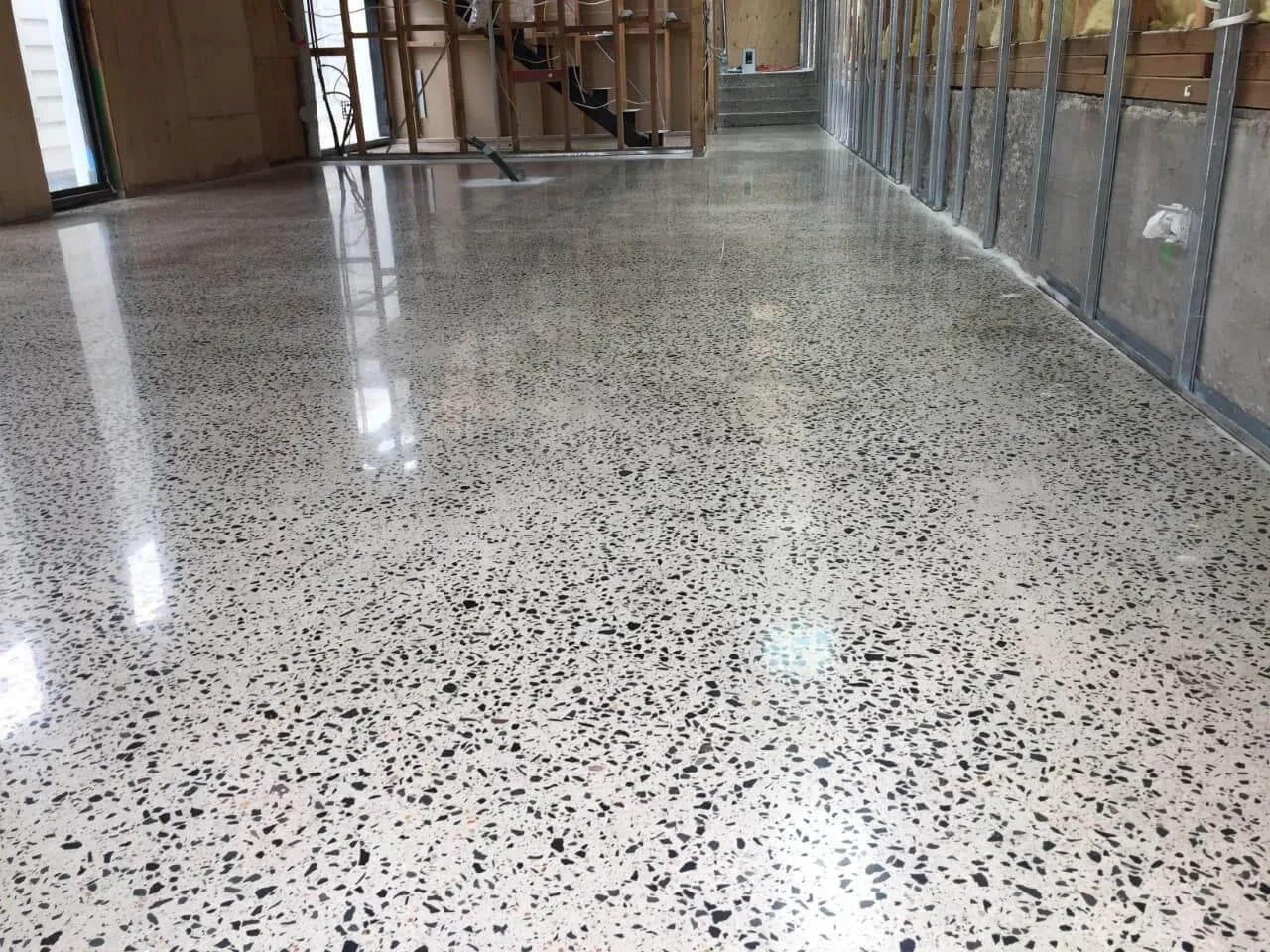
Quick Answer
Resin flooring Dubai (epoxy, polyurethane or MMA) is a seamless, chemically resistant surface best suited to kitchens, garages, clinics and warehouses. Bamboo flooring Dubai is a rapidly renewable hardwood alternative whose strand-woven version outperforms most oak on hardness, making it a strong fit for busy homes. PVC skirting Dubai replaces timber skirting in humid or wet zones because it does not swell, rot or host mould. Risala Furniture and Interiors LLC supplies and installs all three across the Emirates.
Key Facts Table
| Factor | Resin Flooring | Bamboo Flooring | PVC Skirting |
| Material type | Epoxy, polyurethane or methyl methacrylate | Compressed Moso bamboo fibre | Rigid polyvinyl chloride profile |
| Joints | Fully seamless | Click or glue-down planks | Snap-fit or adhesive fixed |
| Water behaviour | Impermeable | Splash resistant | Fully waterproof |
| Indicative Dubai supply-and-fit | AED 90–320 per m² | AED 130–300 per m² | AED 18–55 per linear metre |
| Cure or install time (100 m²) | 3–7 days including cure | 2–3 days | Under 1 day |
| Hardness reference | Shore D 75–85 typical | Strand-woven approx. 3,000+ lbf Janka | N/A |
| Relevant standard | EN 13813, ISO 9239-1 (fire) | ISO 10874, CARB Phase 2 / E1 emissions | EN 15102 |
Introduction
Dubai fit-outs increasingly ask the same three questions: what survives water, what survives traffic, and what still looks considered five years later. Resin flooring, bamboo flooring and PVC skirting each answer part of that. They are also three of the most misunderstood products in the local market, mostly because the cheap versions and the specification-grade versions look identical in a showroom photo. This guide explains the differences that matter on site.
Resin Flooring in Dubai: Seamless, but Only If Prepared Properly
H3: The three main resin families
Epoxy is the workhorse. It is hard, chemically resistant and economical, which is why it dominates warehouses, parking structures and plant rooms across Jebel Ali and Dubai Investments Park. Its weakness is UV exposure, where standard epoxy ambers over time.
Polyurethane (PU) is more elastic and more thermally tolerant. PU cement screeds handle thermal shock from hot washdowns, which is why commercial kitchens and food production units specify them. PU is also the better choice where the slab may move slightly.
MMA (methyl methacrylate) cures in roughly one to two hours, so it is used where a facility cannot close for long. It has a strong odour during application and costs more.
Decorative resin for residential interiors
Flake-broadcast and metallic pigment systems have become popular in Dubai villas and retail showrooms. They read as a luxury finish but still need the same substrate discipline as an industrial floor.
Preparation decides success
Around three quarters of resin floor failures trace back to substrate issues rather than the resin itself. Non-negotiable steps:
- Mechanical preparation. Diamond grinding or shot blasting to open the concrete surface. Acid etching is not an acceptable substitute for a specification job.
- Moisture testing. Concrete relative humidity should generally be below 75%, or a moisture-tolerant primer must be used.
- Concrete age. New slabs should cure for at least 28 days.
- Crack and joint treatment. Static cracks are routed and filled; movement joints must be carried through the resin, never bridged.
- Temperature control. Applying resin on a summer afternoon in an uncooled space causes pinholing and rapid pot-life loss.
For public and commercial spaces, ask for slip resistance data. DIN 51130 R-ratings (R9 to R13) and the pendulum test are the two references Dubai consultants most often accept.
Bamboo Flooring in Dubai: The Strand-Woven Advantage
Bamboo is a grass, not a tree, and reaches harvest maturity in five to seven years compared with several decades for oak. That renewal rate is why it appears in LEED and Estidama documentation as a rapidly renewable material.
Three constructions, very different performance
- Horizontal bamboo: Strips laid flat, showing the classic knuckle pattern. Softest of the three.
- Vertical bamboo: Strips on edge, giving a narrow linear grain. Slightly harder.
- Strand-woven bamboo: Fibres shredded, resin-saturated and compressed under very high pressure. Dramatically harder than either, commonly measuring above 3,000 lbf on the Janka scale, which puts it well ahead of European oak.
For Dubai homes, strand-woven is almost always the right answer. It resists denting from furniture and heels, and it handles the dry indoor air of a permanently air-conditioned villa better than horizontal bamboo.
Emissions and adhesives
Bamboo planks are bonded with resin, so formaldehyde emission class matters. Look for E1 or E0 rated boards, or CARB Phase 2 / TSCA Title VI compliance. Risala Furniture and Interiors LLC specifies low-emission grades as standard on residential projects, which also supports green building submissions.
PVC Skirting in Dubai: Small Detail, Large Impact
Skirting is the junction where flooring meets wall, and in the UAE it is also where cleaning water, humidity and pest ingress meet. PVC profiles solve several problems at once.
Advantages over MDF or timber skirting:
- Does not swell after mopping or a minor leak.
- Flexible profiles follow curved walls and columns.
- Many designs include an integrated cable channel for data and lighting runs.
- Available in matt, gloss, woodgrain and aluminium-look finishes.
- Coved variants create a sealed, hygienic junction for clinics and kitchens.
Typical heights: 60 mm for compact apartments, 80–100 mm for standard villas, 120–150 mm for high-ceiling reception and majlis spaces.
Comparison Table: Matching Product to Space
| Space | Best flooring | Skirting recommendation | Why |
| Villa living room | Strand-woven bamboo | 100 mm PVC woodgrain | Warmth with dent resistance |
| Commercial kitchen | PU cement resin | Coved PVC | Thermal shock and hygiene |
| Garage / workshop | Epoxy resin | 60 mm PVC | Chemical and tyre resistance |
| Clinic or lab | Resin or welded vinyl | Coved PVC | Seamless, cleanable |
| Retail showroom | Decorative metallic resin | Aluminium-look PVC | Visual impact, fast maintenance |
| Bedroom | Bamboo | 80 mm PVC | Comfort underfoot |
Actionable Tips
- Ask for a mock-up panel of decorative resin before committing. Metallic systems vary between applicators far more than between brands.
- Check the fire performance classification (ISO 9239-1 / EN 13501-1) for any floor in a commercial or common area. Dubai Civil Defence requirements apply.
- Buy bamboo from one production batch so the colour is consistent.
- Maintain 40–60% indoor relative humidity to keep bamboo stable.
- Never mop bamboo with excess water. Use a barely damp microfibre mop and a pH-neutral cleaner.
- Specify PVC skirting with a soft-lip edge to close small wall irregularities without caulking every metre.
Why Local Experience Matters
Product data sheets are written for temperate climates. A resin primer that tolerates 65% substrate humidity in Europe behaves differently on a Dubai ground slab in July. Risala Furniture and Interiors LLC works to site-tested application windows rather than data-sheet defaults, and carries out its own moisture readings before mobilising.
To arrange a survey or see material samples, use the Risala Furniture and Interiors LLC Google Maps location.
FAQ
1. How long does resin flooring last in Dubai? Well-prepared industrial epoxy typically lasts 10–20 years. Decorative residential systems usually need a topcoat refresh every 5–8 years.
2. Is epoxy or polyurethane better? Epoxy for chemical resistance and cost. Polyurethane for thermal shock, flexibility and UV stability. Many projects use an epoxy body coat with a PU topcoat.
3. Can resin flooring be laid over tiles? Yes, if the tiles are firmly bonded and mechanically abraded first. Hollow-sounding tiles must be removed.
4. Is bamboo flooring harder than oak? Strand-woven bamboo is significantly harder than European oak on the Janka scale. Horizontal and vertical bamboo are softer than oak.
5. Does bamboo flooring warp in UAE humidity? Not if it is acclimatised for 72 hours before installation and indoor humidity is kept in the 40–60% range.
6. Is bamboo suitable for bathrooms? No. Use resin, SPC or tile in wet rooms.
7. What is PVC skirting made of? Rigid polyvinyl chloride, often with a co-extruded soft edge, produced in 2.4 m or 3 m lengths.
8. Can PVC skirting be painted? It can, with an adhesion primer, but most people choose a factory finish instead because painted PVC chips at corners.
9. How long before I can walk on new resin flooring? Light foot traffic is usually possible after 24 hours, full chemical cure after about 7 days. MMA systems are walkable within a few hours.
10. Where does Risala Furniture and Interiors provide its services? Risala Furniture and Interiors LLC provides its services in UAE ,OMAN , QATAR , SAUDI ARABIA , KUWAIT , BAHRAIN and all across the Gulf and Middle East region.
Key Takeaways
- Resin flooring succeeds or fails on substrate preparation, not on brand.
- Strand-woven bamboo is the only bamboo construction suited to high-traffic UAE homes.
- PVC skirting outlasts MDF in any area exposed to mopping or humidity.
- Ask for slip resistance, fire classification and emission certificates in writing.
- Match the product to the room’s exposure, not to a catalogue image.
Conclusion
If the space gets wet, hot or chemically loaded, specify resin and insist on documented substrate preparation. If you want natural warmth with genuine dent resistance, strand-woven bamboo is the better value than most mid-range engineered wood. Finish either with PVC skirting so the weakest junction in the room is also the most durable. Risala Furniture and Interiors LLC can survey the space, test the slab and quote all three elements as a single package.
